Google’s AI glasses are starting to look less like a science-fiction demo and more like a product category that could soon matter. But they are not fully there yet.
A new TechCrunch hands-on report from Google I/O 2026 described Google’s Android XR display glasses as promising, useful in moments and still clearly unfinished. That is an important distinction: Google’s first audio-only AI glasses are expected this fall, while the richer display version remains further away.
What happened
TechCrunch tested Google’s upcoming AI-powered Android XR glasses during Google I/O 2026. The outlet said the prototype was not the audio-only eyewear Google plans to ship first, but a more advanced version with an in-lens display that can place helpful information over the real world.
The prototype showed how Gemini could support live translation, walking directions, widgets, object recognition and other hands-free tasks. TechCrunch reported that the glasses could identify some objects smoothly, but also struggled in at least one test involving a replica Monet image until the camera was properly enabled and the user moved closer.
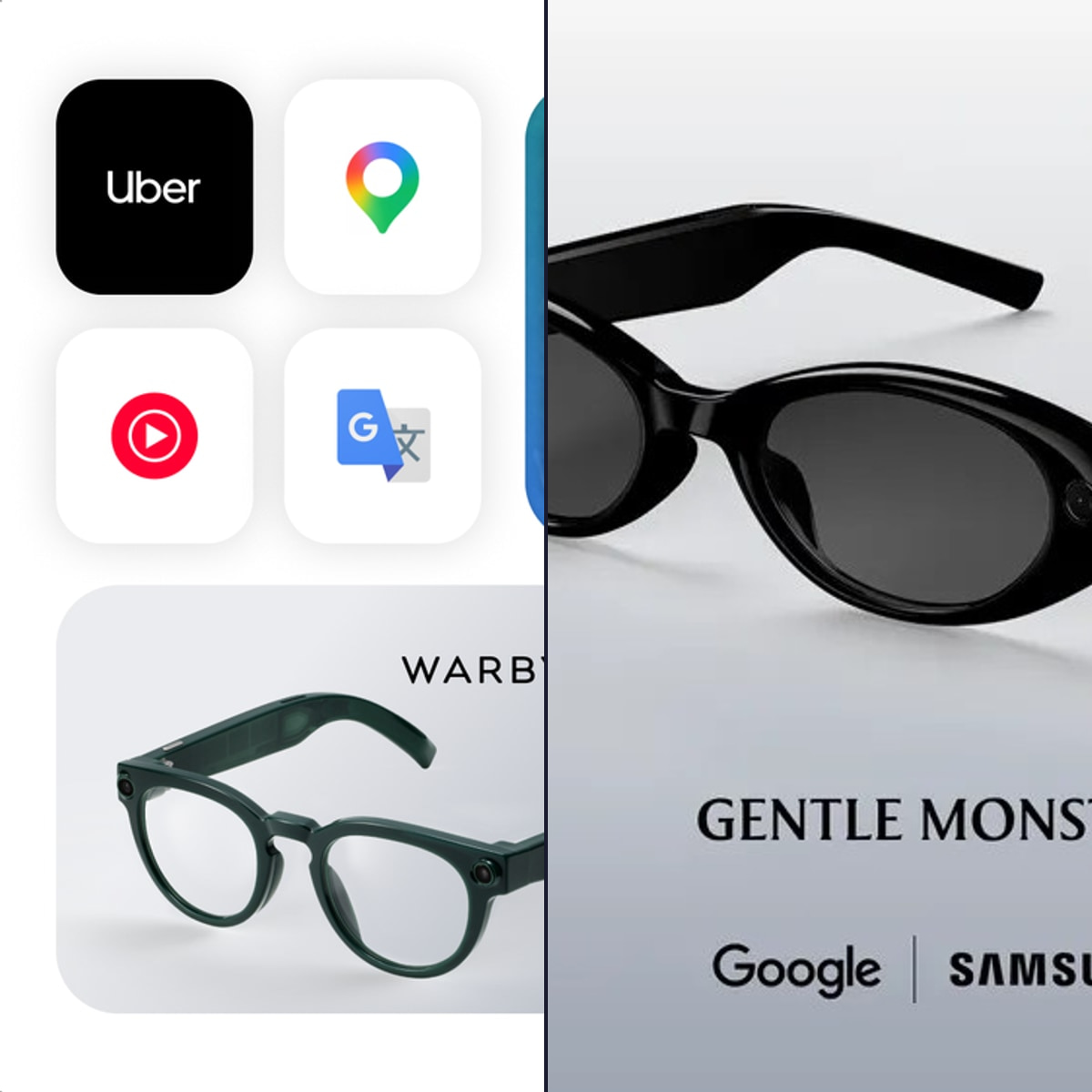
Google’s official announcement says there will be two types of intelligent eyewear: audio glasses and display glasses. The audio glasses are launching first later this fall, with frames from Gentle Monster and Warby Parker, in partnership with Samsung. Google says both audio and display glasses are built around Gemini and are designed to help users without making them pull out a phone.
The bigger picture
Smart glasses have been a difficult category for years. The idea is attractive: keep users connected, informed and assisted while their phone stays in a pocket. The problem has always been making the glasses useful, comfortable, socially acceptable, private enough and affordable enough for everyday wear.
Google’s new approach is different from the old Google Glass era because it is no longer just about putting a tiny computer on someone’s face. It is about giving an AI assistant eyes, ears and a close link to the user’s phone apps.
That is why Gemini matters. If the glasses can understand what the user is looking at, answer questions, translate speech, summarize messages, take photos, edit images, give directions and interact with apps, the device becomes more than a notification screen. It becomes a wearable AI interface.
Google is also trying to avoid one of the biggest barriers to smart glasses adoption: appearance. Its partnerships with Gentle Monster and Warby Parker suggest that fashion and comfort are central to the strategy, not side details. If users do not want to wear the frames, the technology does not matter.
Why this may be happening
One reason Google is pushing AI eyewear now is that phones are reaching a mature stage. AI companies are searching for new interfaces that make assistants feel more natural than typing into a chatbot or speaking into a phone.
Glasses are one possible answer because they sit close to the senses. They can see what the user sees, hear nearby speech and provide help without forcing the user to stop, unlock a screen and open an app.
Competition is another factor. Meta’s Ray-Ban smart glasses helped prove that camera-and-audio eyewear can attract mainstream attention, even without full augmented-reality displays. Google’s version appears to be aiming for the next step: combining a more capable assistant with Android XR and, eventually, visual overlays.
There is also an ecosystem reason. Google already owns Android, Gemini, Search, Maps, Photos, YouTube, Gmail and many everyday app connections. If those services work through glasses, Google can make AI feel less like a separate product and more like a layer across daily life.
What it means
For users, the near-term product to watch is the audio glasses launching this fall. These are expected to provide Gemini through speakers, microphones and cameras, with features such as asking questions about the world, navigation help, calls, texts, photos, translations and app actions.
The display glasses are more ambitious. They could show directions, translations, widgets and contextual information directly in the wearer’s view. That could be more useful than audio alone, especially for navigation and real-time subtitles, but it also raises more challenges around battery life, weight, heat, display quality and social comfort.
TechCrunch’s hands-on suggests Google is making progress, but the prototype still behaved like a prototype. Some tasks worked smoothly, while others showed that camera behavior, recognition accuracy and real-world reliability still need refinement.
For developers and businesses, Android XR could become an important platform if Google succeeds. Apps built for phones may eventually connect to glasses, while developers could design new glanceable tools, translation experiences, field-work aids, shopping flows, accessibility features and productivity helpers.
What is still unclear
- Google has not confirmed pricing for the first audio glasses or future display versions.
- Battery life, exact weight, camera quality and everyday durability remain key unanswered questions.
- The display glasses do not yet have a confirmed public launch date.
- Privacy expectations are still developing, especially around cameras, microphones and AI that can interpret the surrounding environment.
- It is unclear how well Gemini will perform outside controlled demos, in noisy streets, low light, crowded places or poor network conditions.
- Feature availability may vary by market, phone type, app support and rollout schedule.
Final takeaway
Google’s AI glasses appear close enough to be taken seriously, but not close enough to be judged as a finished consumer product. The most important change is that smart glasses now have a clearer reason to exist: AI can turn them into a hands-free assistant rather than just a tiny wearable screen.
The challenge is execution. If Google can make the glasses stylish, comfortable, reliable, private and reasonably priced, Android XR eyewear could become one of the next major AI hardware categories. If it cannot, the product may remain another impressive demo that people admire but do not wear every day.
Sources / references
- TechCrunch: We tried Google’s AI glasses and they’re almost there.
- Google Blog: Intelligent eyewear with Gemini is coming this fall.
- Google Blog: A new look at how Android XR will bring Gemini to glasses and headsets.
- WIRED: Hands-On With All of Google’s New Upcoming Android XR Smart Glasses.
- TechCrunch: Xreal, Google’s smartglasses partner, thinks it has finally mastered this notoriously tricky industry.