Apple has not announced AirPods with cameras. But a new wave of reporting and commentary has raised an interesting design question: could earbuds become a better AI wearable than smart glasses for many people?
PhoneArena argued that Apple’s rumored camera-equipped AirPods show why the company remains a design leader. That is an opinion, not a confirmed product verdict. Still, the idea is worth examining because it points to a larger shift in consumer technology: AI assistants may need eyes, ears and a comfortable place on the body.
What happened
PhoneArena published an opinion article on 8 May 2026 titled “The new AirPods prove Apple is still the king of design.” The article argued that rumored AirPods with cameras could give Apple a strong alternative to display-free smart glasses.
The article said Apple is working on AirPods with cameras and described them as being in late-stage development. It framed the concept as a design win because many people already wear earbuds in public, while not everyone wants to wear glasses.
The Verge, citing Bloomberg’s Mark Gurman, reported that Apple’s rumored camera-equipped AirPods are in design validation testing, a stage before production validation testing. The report said the cameras are not designed for normal photo or video capture, but for low-resolution visual information that users could ask Siri about.
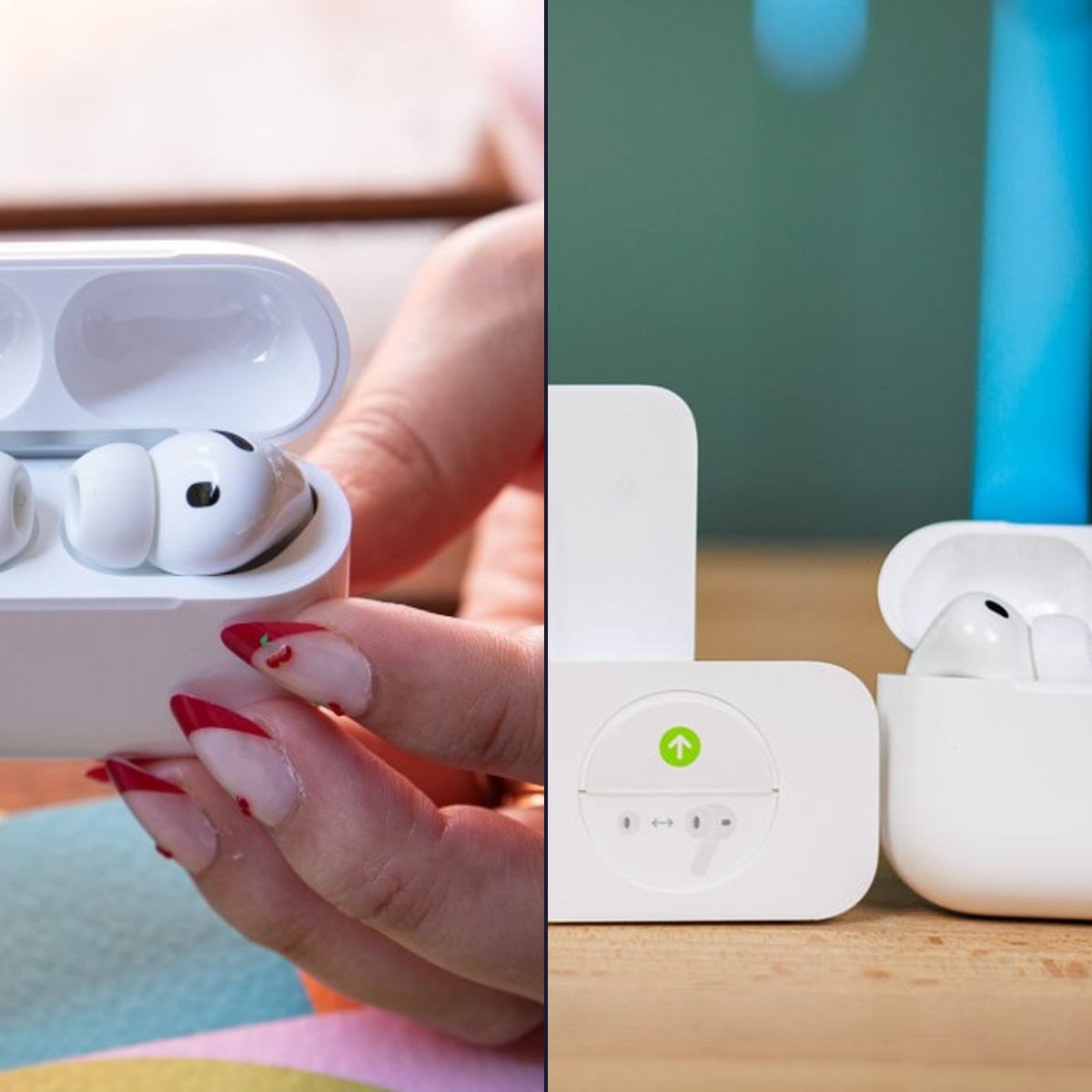
The Verge also reported that the prototypes resemble AirPods Pro 3 but have longer stems to fit the camera hardware, and that a small LED would indicate when visual data is being sent to the cloud. The report said Apple had hoped for an earlier launch, but timing was pushed back because of delays to a more capable Siri.
Apple has not confirmed the product, name, price, launch date or final features. That means all claims about “camera AirPods” should be treated as rumor until Apple announces them.
The bigger picture
The idea fits a broader race to build AI wearables. Meta’s Ray-Ban smart glasses already let users ask Meta AI about what they are looking at. Meta’s own support page says the glasses can send a photo to Meta’s cloud so the AI can process a response.
Apple already has the software concept for visual AI on iPhone. Apple Support says Visual Intelligence can help users learn more about what is in front of them, identify places, plants and animals, translate menus, create events from posters and ask questions. A future wearable could make that type of interaction more hands-free.
Apple also has a history of turning familiar accessories into wider platforms. AirPods started as wireless earbuds, but newer models now include features beyond music, such as noise control, health-related sensing and Live Translation. Apple’s AirPods Pro 3 announcement described heart-rate sensing, improved fit, Active Noise Cancellation and Apple Intelligence-enabled Live Translation.
That is why the design question matters. If AI assistants become more useful when they can understand the user’s surroundings, the key battle may not be only about the best model. It may also be about the most socially acceptable hardware.
Why this may be happening
One likely reason is comfort and habit. Earbuds are already common in public spaces, offices, gyms and transport. Adding visual sensing to a device people already wear may feel less disruptive than asking users to adopt a new face-worn product.
Another reason is audio. AI assistants need a way to hear commands and speak responses. AirPods already include microphones and speakers, so the missing piece for visual AI is environmental awareness. A camera or low-resolution visual sensor could provide that context.
There is also a privacy-design reason. Smart glasses raise obvious bystander concerns because they look like they may be recording what the wearer sees. Camera-equipped AirPods could raise similar concerns, but their design may be less visually dominant. That could be an advantage or a problem, depending on how clearly Apple signals when sensing is active.
Finally, Apple may be trying to build a bridge toward broader wearable computing. A camera-equipped AirPods product could test visual AI behavior before Apple commits to more ambitious smart glasses or augmented-reality devices.
What it means
For Apple, the rumored product would be a way to bring Visual Intelligence-style interactions into a wearable form without immediately depending on smart glasses. If the product works well, it could make Siri feel more useful in everyday situations.
For users, the appeal would be convenience. Instead of pulling out a phone to identify an object, translate a sign or ask about surroundings, a user might ask through AirPods and hear the answer privately.
For the wearable market, the concept would challenge the assumption that AI assistants must live in glasses. Display-free smart glasses may still have advantages, especially when they can see from the user’s eye line. But earbuds could be easier to wear, easier to explain and more familiar to many users.
For privacy, the product would create hard questions. Users would need to know when visual data is being captured, whether data is processed on-device or in the cloud, how long it is retained, and what bystanders can reasonably understand about the device.
For design, PhoneArena’s central argument is persuasive as a hypothesis: the best AI wearable may be the one people already accept. But that does not prove Apple has solved the category. Execution, privacy, battery life, Siri quality and real-world usefulness will decide whether the idea works.
What is still unclear
- Apple has not confirmed camera-equipped AirPods.
- The final product name, launch date, price and supported devices are unknown.
- It is unclear whether the sensors will be true cameras, infrared sensors or another low-resolution visual system.
- The privacy architecture is not confirmed, including how much processing would happen on-device versus in the cloud.
- It is unclear whether users will accept visual sensors in earbuds more readily than cameras in glasses.
- Siri’s readiness may be a major factor in whether the product is useful at launch.
Final takeaway
The rumored camera-equipped AirPods are not confirmed, so they should not be treated as a guaranteed Apple product. But the design idea is important.
If AI wearables need to understand the world around the user, Apple may not have to start with glasses. It could start with a product people already wear every day. That is why the rumor matters: not because it proves Apple is still the “king of design,” but because it shows how design, habit, privacy and AI may shape the next wearable category.
Sources / references
- PhoneArena: The new AirPods prove Apple is still the king of design.
- The Verge: Apple’s AirPods with cameras for AI are apparently close to production.
- Macworld: Apple’s rumored camera-equipped AirPods are for Siri, not for you.
- Apple: Introducing AirPods Pro 3, the ultimate audio experience.
- Apple: AirPods Max 2 announcement.
- Apple Support: Use Apple Intelligence and Visual Intelligence on iPhone.
- Meta: How to ask Meta AI about what you see with AI glasses.