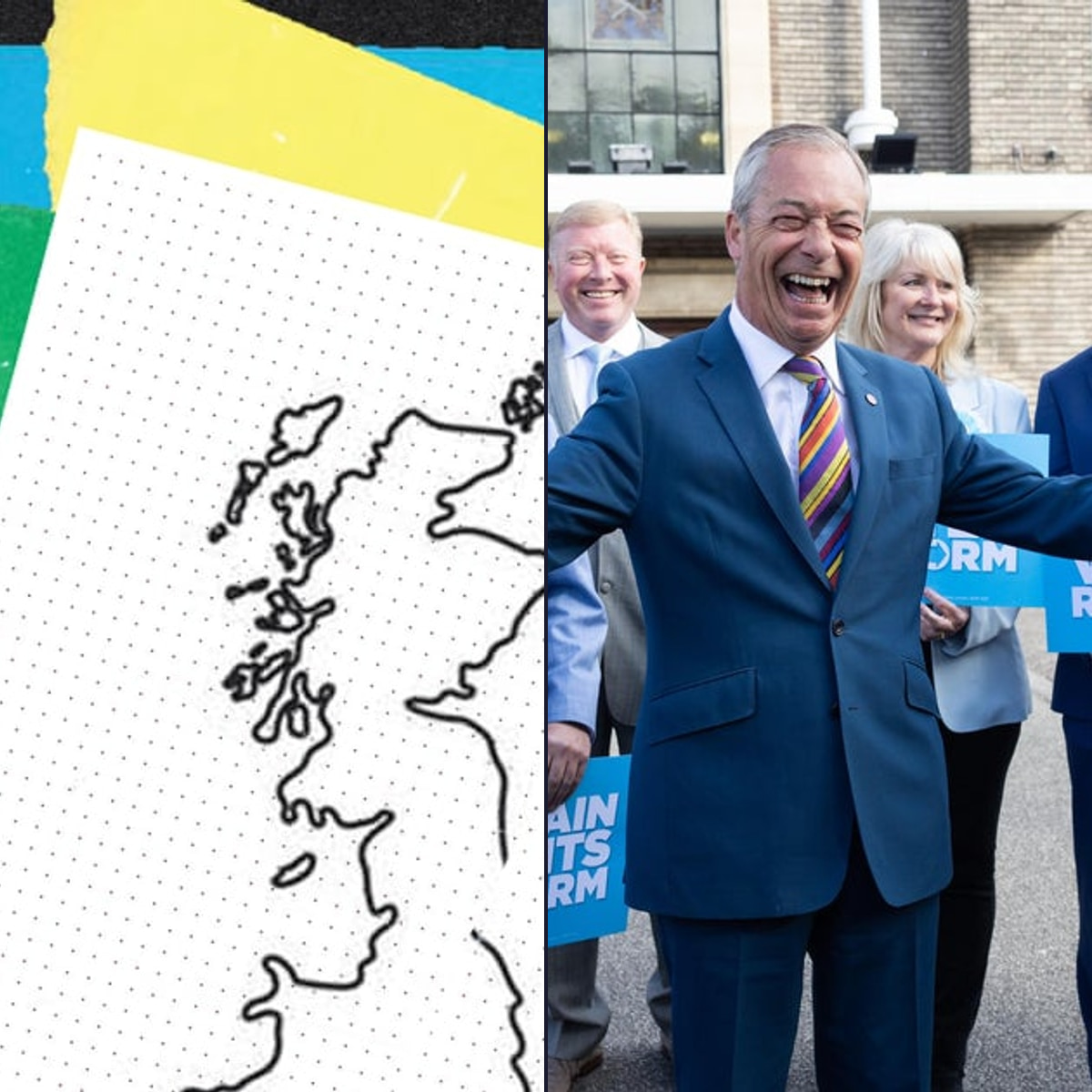
Nigel Farage’s Reform UK turned Britain’s May 2026 elections into a warning sign for both major parties. The party made major gains in English local elections and performed strongly in areas long associated with Labour or Conservative dominance.
The New York Times article focused on Reform UK’s election results and Farage’s claim that the outcome showed a major shift in British politics. The wider significance is not just that Reform won more seats. It is that voters appear increasingly willing to use smaller or insurgent parties to punish the political establishment.
What happened
UK voters went to the polls on 7 May 2026 in a large set of local elections in England, alongside elections in Scotland and Wales. Results reported on 8 May showed Reform UK making substantial gains, while Prime Minister Keir Starmer’s Labour Party suffered heavy losses.
Reuters reported that Reform UK gained more than 1,000 council seats in England and that early results showed Britain moving into a more fragmented multi-party era. CBS News reported that Farage called the outcome “a truly historic shift in British politics.”
Reuters also reported that Labour lost control of councils in several symbolic areas, including Tameside and Wigan, while Reform took control of Havering in east London. Al Jazeera reported early gains for Reform in Labour “Red Wall” areas, including Wigan and Leigh, and said Reform gained its first council of the campaign in Newcastle-under-Lyme.
The Guardian’s election mapping described Labour’s performance as one of heavy losses across England, Scotland and Wales, with the party losing ground to Reform on the right and the Greens or nationalist parties elsewhere.
The bigger picture
The results matter because they suggest the old Labour-Conservative dominance of British politics is weakening. Britain still uses a first-past-the-post system for Westminster elections, but voter support is now spread across more parties and regions.
For Labour, the results were especially damaging because they came less than two years after Starmer’s landslide general election victory. Reuters reported that Starmer said he would not “walk away,” accepted responsibility for the losses, and argued that voters were frustrated with the pace of change.
For the Conservatives, the results continued a longer decline. Reform’s rise creates a direct challenge on the right, especially in areas that voted strongly for Brexit or feel ignored by Westminster.
For Reform UK, the elections were important because local government success can create a political base. Councillors, local campaigns and council control give a party visibility, organizing capacity and a way to prove it can govern beyond protest politics.
Why this may be happening
One likely reason is economic frustration. Al Jazeera reported that cost of living was a top concern in polling before the local elections. When household budgets feel tight and public services feel strained, governing parties often face punishment.
Another reason is dissatisfaction with mainstream parties. Reuters said Labour and Conservatives were losing support not only to Reform, but also to the Greens and nationalist parties. That suggests the result was not a simple swing from one major party to another, but a broader rejection of the established political pattern.
Brexit-era political geography also appears to matter. Reform’s message has performed strongly in places that backed Brexit and where voters say they feel neglected by national politics. Le Monde reported that Reform attracted support in poorer areas, northern regions and coastal towns, places where discontent with Westminster has been building for years.
Farage’s personal brand also remains important. He has long positioned himself as an anti-establishment figure, first through UKIP and Brexit campaigning, and now through Reform UK. The question is whether that energy can translate from protest votes into stable governing support.
What it means
For Labour, the results increase pressure on Starmer to show visible progress on living costs, public services and trust in government. The danger for Labour is that Reform can take working-class voters on the right while Greens and nationalist parties pull support from the left or regional bases.
For the Conservatives, Reform’s gains raise a strategic problem. Moving closer to Reform’s agenda may risk alienating moderate voters, while ignoring Reform may allow Farage to keep taking right-leaning support.
For Reform UK, the gains are a breakthrough but also a test. Winning council seats is different from running councils well. The party now faces scrutiny over candidate quality, local service delivery, finances and whether it can turn anger into credible policy.
For British politics, the deeper message is fragmentation. Voters are not only choosing between Labour and Conservatives. They are increasingly splitting among Reform, Greens, Liberal Democrats, SNP, Plaid Cymru and independents depending on region and issue.
What is still unclear
- It is unclear whether Reform’s local election gains will translate into a similar performance at the next UK general election.
- Local elections can punish a governing party, but they do not always predict national results exactly.
- Reform’s ability to govern councils effectively remains untested at this larger scale.
- It is not clear whether Labour can recover support by changing policy, leadership style or economic messaging.
- The Conservative response to Reform’s rise remains uncertain.
Final takeaway
Reform UK’s May 2026 results show that Nigel Farage’s party has become more than a protest vehicle. It now has a wider local footprint and a clearer claim to be disrupting Britain’s old party system.
But a surge is not the same as a guaranteed path to national power. The next test is whether Reform can turn anger at Labour and Conservatives into durable support, competent local government and a convincing national offer.
Sources / references
- New York Times: Reform UK election results and Farage article submitted by the user.
- Reuters: Starmer vows to fight on after Labour punished in polls across Britain.
- CBS News: UK election results mark “historic shift in British politics,” Trump ally Farage says.
- The Guardian: 2026 elections mapped: how Labour lost ground in different directions.
- Al Jazeera: UK’s Labour set for heavy losses in elections as Reform makes early gains.
- Le Monde: Reform UK records historic breakthrough in local elections.